
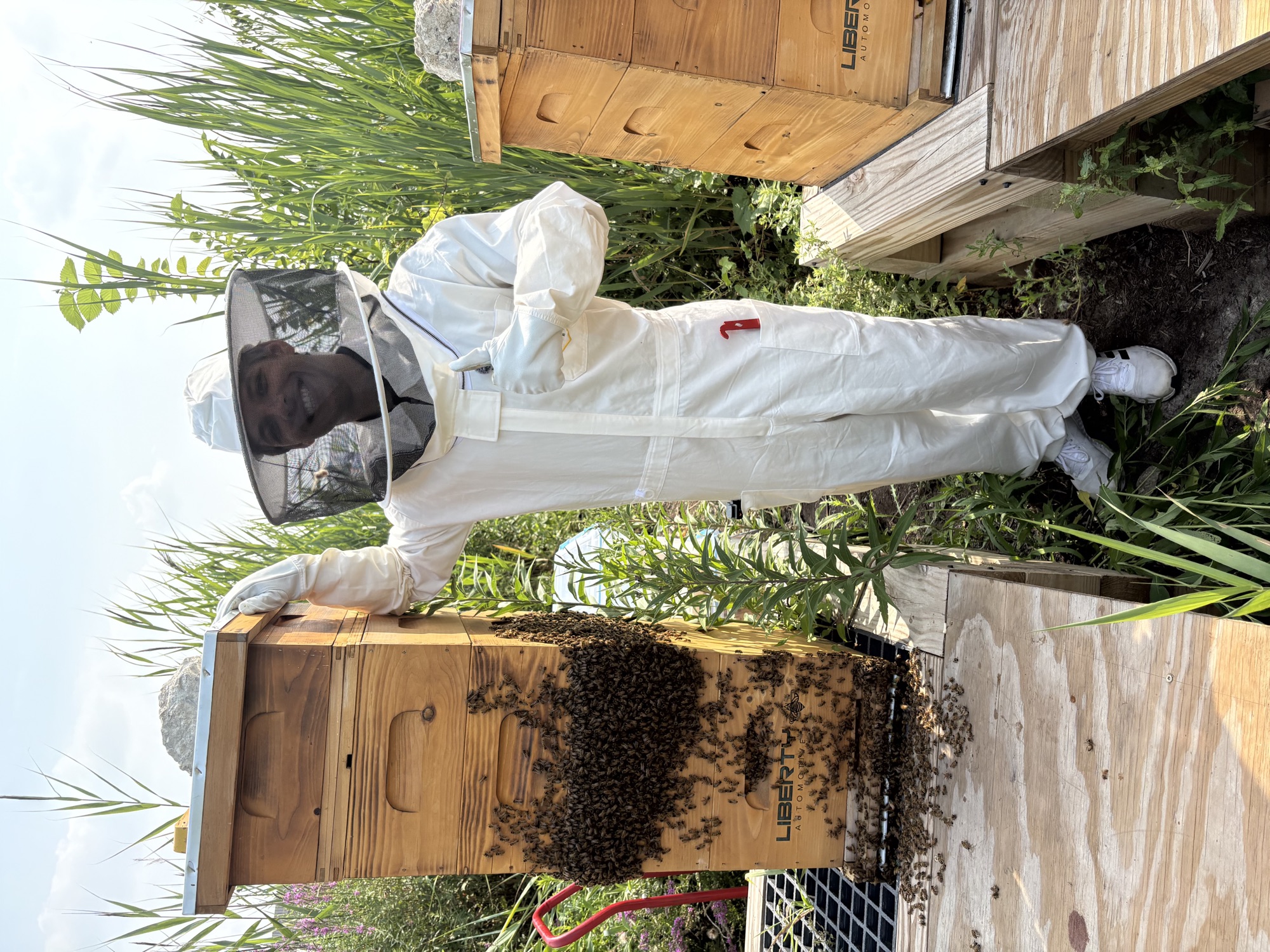
Yes. In a cold-winter place like northern Illinois, wrapping a beehive for winter improves the odds that the colony makes it to spring, as long as moist air still has a way out. The best recent evidence comes from University of Illinois entomologists, who wrapped half of 43 hives in Champaign County for the winter of 2020 to 2021 and published the results in PLOS ONE in 2022.
The wraps were simple: a corrugated plastic sleeve over the whole hive, a 1.5-inch foam board on top of the inner cover, and a small hole cut near the top for ventilation. They went on November 12, almost exactly this week on the calendar. By spring, only one of the 22 wrapped colonies had died. The uncovered group lost 6 of 21.
Here is the part that surprised us. The wrap did not make the winter cluster warmer, because honey bees (Apis mellifera) held the same cluster temperature either way. What changed was the fuel bill. Over the winter, uncovered hives lost weight, which is mostly honey being eaten, at almost twice the rate of wrapped ones, and they ate more of the sugar cake added in midwinter.
A wrap does not heat the hive. It keeps the bees from spending what they saved.
The catch is water. A cluster burning honey gives off carbon dioxide and water vapor, and Cornell's beekeeping guide warns that the vapor condenses under a cold lid and drips back onto the bees. Wet bees in cold weather do not last, so Cornell recommends a small upper entrance, made with a shim or a notch in the inner cover, so moisture can escape. Wrap the hive, but never seal it.
Libertyville sits about 150 miles north of Champaign, where winters run colder, so the case for a wrap only gets stronger up here. We like that this answer came from careful counting rather than folklore: two groups, the same care, and the numbers published for anyone to check. That is how we try to do business too. Show your work, keep it simple, and look after what you are responsible for.