
Yes, leave at least some of them. Fallen leaves are winter shelter for many native bees, and the easiest way to help is to rake them off the lawn and into garden beds and under trees instead of bagging them. The Xerces Society, the pollinator conservation group behind the Leave the Leaves campaign, has been making this case for years, and it is good advice for any yard in Lake County.
Start with the bumble bee. A bumble bee colony lives only one season. At the end of summer, the new queens mate, and the rest of the colony dies off. According to the Xerces Society, those mated queens burrow only an inch or two into the earth to hibernate. That is not much cover against an Illinois January. A blanket of leaves on top is the difference between a mild bed and frozen ground.
Bumble bees are not the only ones down there. University of California Master Gardeners estimate that about 70 percent of native bees nest in the ground. The National Park Service notes that many bumble bees, sweat bees, and mining bees dig into soil and rely on leaf cover for insulation. The other 30 percent or so nest in hollow stems and old beetle tunnels, which is why standing plant stalks are worth leaving too.
The neighbors who do the most work in your yard are the ones you never see in winter.
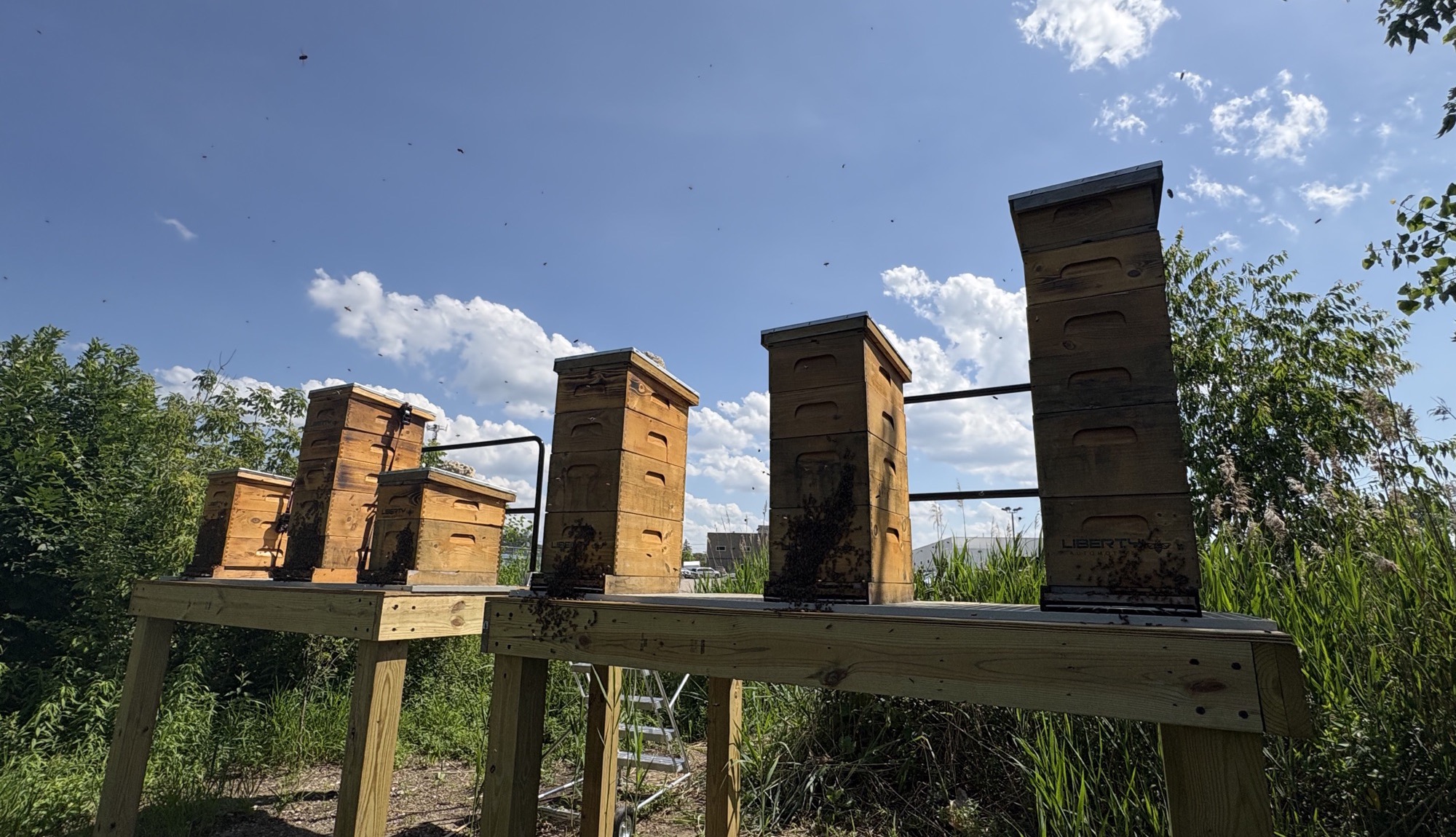
Our own honey bees, Apis mellifera, do not need the leaves. They spend winter inside the hive in a tight cluster, living on the honey they stored all summer. But they share every flower in Libertyville with many kinds of wild bees, and those wild bees do much of the pollinating that keeps local gardens and trees productive. A spring with strong bumble bee queens is a better spring for everyone, including our hives.
So this weekend, rake the lawn and the walkways, and pile the rest under the shrubs. Keep the leaves whole rather than mowing them into confetti, and hold off on spring cleanup until the weather has really turned. It is less work, not more. We like any plan where the honest, simple choice is also the right one.