
If you see dead bees scattered in front of a beehive in winter, the colony is most likely doing exactly what it should. Honey bees (Apis mellifera) stay awake all winter in a tight cluster, older workers die off one by one, and the living bees carry the bodies out whenever the weather lets them. Cornell University's beekeeping calendar for the Northeast puts it plainly: dead bees scattered on the snow outside the hive are a good sign.
The job of hauling out the dead belongs to undertaker bees. A 2013 review in the International Journal of Biological Sciences notes that undertaking was first described as the specialty of a small group of workers, only 1 to 2 percent of the colony. They find the dead by chemistry rather than sight, since the work happens in the dark, and they remove a corpse faster than a piece of debris of the same size. An undertaker grabs the body, carries it outside, and drops it away from the hive.
In summer you rarely notice any of this. Undertakers fly the bodies a short way off, and the losses vanish into the grass of a colony that Cornell says can hold 40,000 to 60,000 bees at its peak. Winter changes the picture. On cold days the bees cannot fly, so the dead collect on the bottom board, and when a warm day of about 50°F arrives the colony cleans house all at once. Against white snow, every one of those bodies shows.
A healthy hive keeps its house clean in plain view, and we think a good business should too.
A scattering is normal. A heap is worth a closer look. The Iowa State Apiarist lists piles of dead bees covering the bottom boards and the ground in front of a hive as one sign of pesticide damage, and notes that in long cold spells a shrinking cluster can lose touch with its honey and starve with stores still in the hive. Cornell also advises keeping winter entrances clear of ice so the colony can breathe, and an entrance packed with bodies blocks the air just the same.
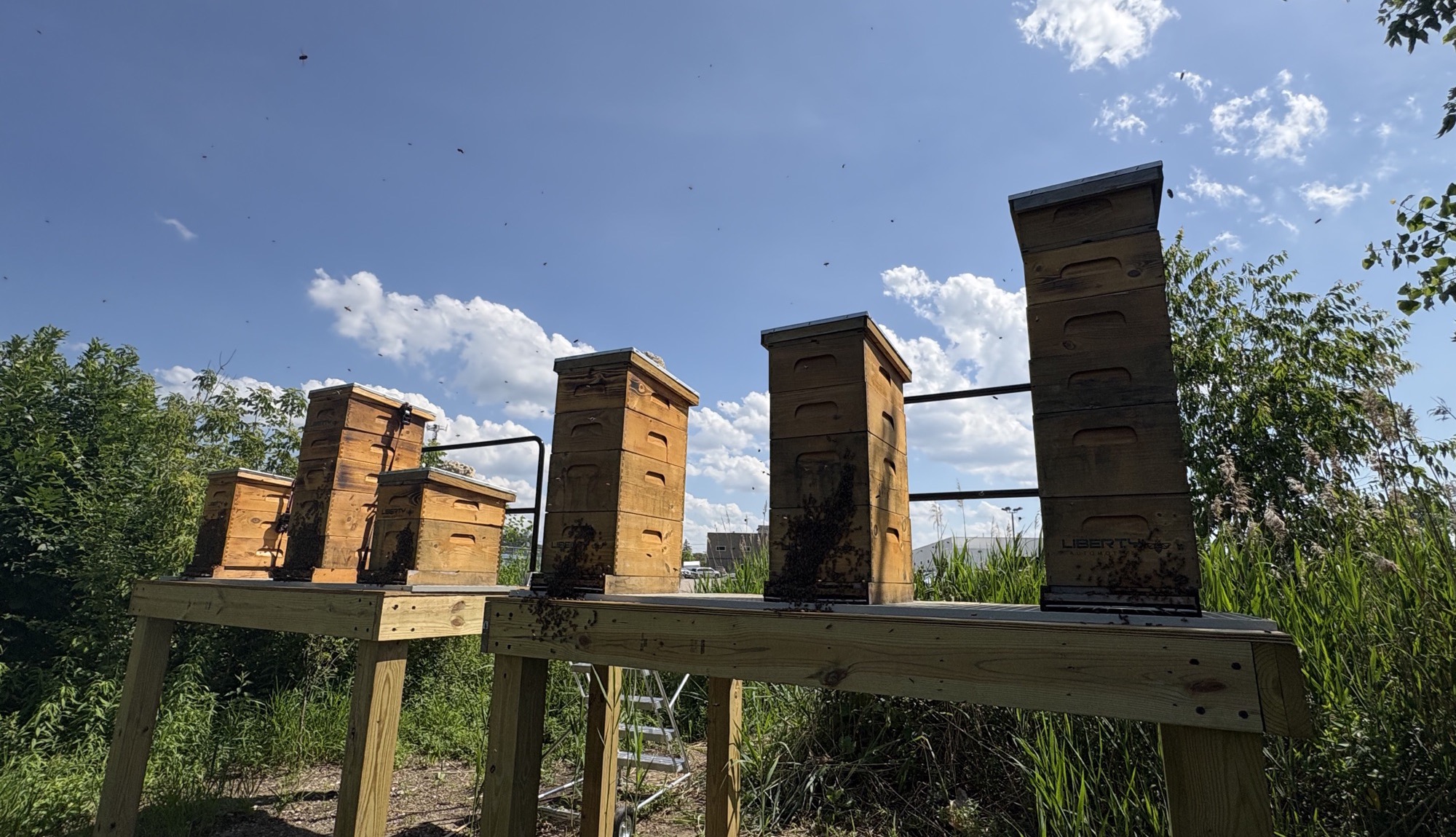
We find something reassuring in a colony that keeps its house in order through the hardest months, and does it where anyone can see. Our six hives here in Libertyville tell the truth every winter, good days and bad, right there on the snow. No hiding it, no dressing it up. That is how we try to run things on our side of the lot too.