
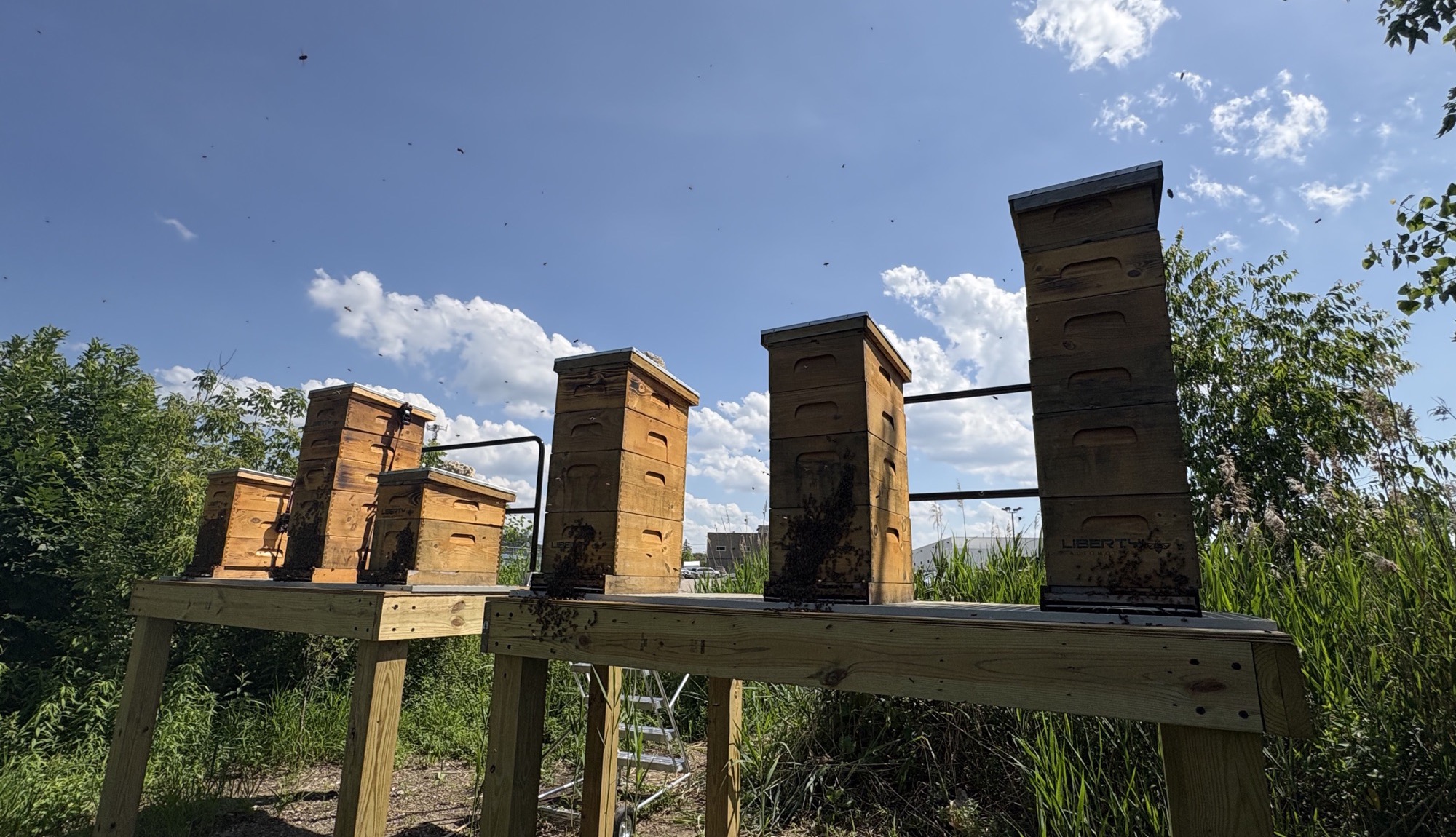
By January in Lake County, the lot is plowed, the loaner cars have their snow brushes, and the hives at the edge of the campus look abandoned. They are not. Inside each one, thousands of bees are running the most disciplined winter operation in nature.
When the temperature drops, the colony pulls into a cluster, a ball of bees the size of a basketball with the queen at its center. The bees on the inside unhook their wing muscles and shiver, generating heat like ten thousand tiny furnaces. The core of the cluster holds above ninety degrees even when the air outside the box is below zero.
The bees on the outside of the ball form an insulating shell, packed tight, heads in. It is the coldest, hardest post in the hive, and no bee holds it for long. They rotate, outside bees burrowing into the warm center, warmed bees taking a shift on the edge. All winter, turn after turn, nobody left in the cold twice in a row.
The coldest job in the hive is taken in turns. Nobody is left on the outside for long.
The fuel for all this is the honey they spent the summer making. A colony burns through thirty or forty pounds of it between the first frost and the first dandelion. That is why we never take more than the bees can spare, and why the honey program runs out when it runs out.
We like to think we run the dealership the same way through an Illinois winter. Somebody has to take the cold jobs, the early Saturday, the lot shift in the wind, and the trick is the same one the bees figured out: take turns, keep the middle warm, and trust that spring is coming.