
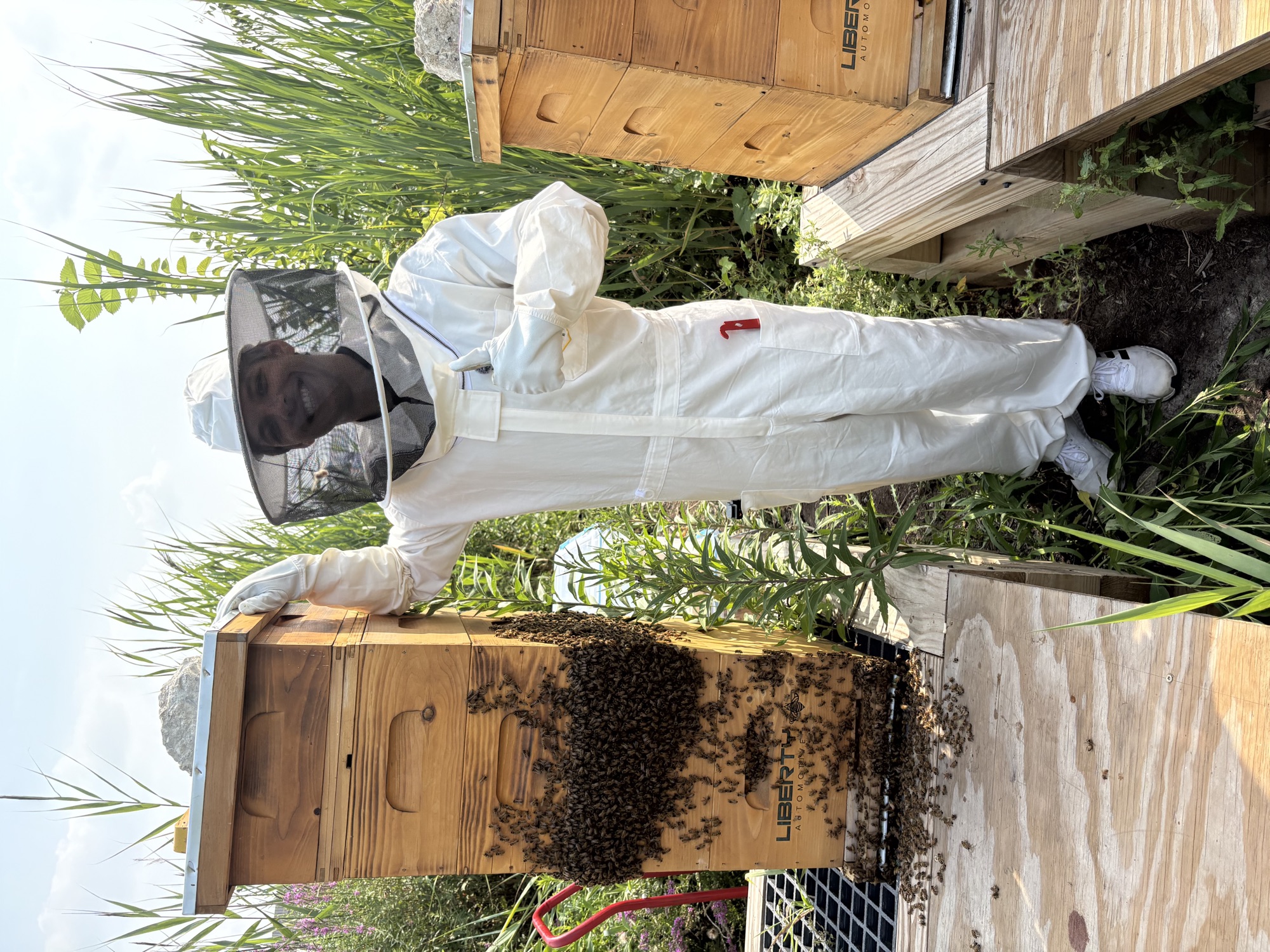
A honey bee colony in a northern climate needs about 90 pounds of stored honey to get through winter. That is the figure University of Florida IFAS Extension gives in its guide to overwintering colonies in the North. Bees cannot forage once the cold sets in, so everything the colony eats between late fall and the first spring flowers has to be in the comb before the weather turns.
Weight turns out to be the best predictor of which hives make it. A team led by Mehmet Döke at Penn State weighed colonies going into winter and published the results in the Journal of Economic Entomology. Hives heavier than 30 kilograms, about 66 pounds, survived at a rate of about 94 percent. Hives under 20 kilograms, about 44 pounds, had low survival, and colony size mattered more than where the bees came from.
That is why October is lift-test season. A beekeeper grabs the handle on the back of the bottom box and tries to tip the hive forward with one hand. A hive that barely budges is heavy with honey. One that rises easily is short, and gets thick sugar syrup in the fall, two parts sugar to one part water, which the bees store like honey.
Bees never borrow against spring. What they eat in January, they put away in summer.
Insulation makes the honey go further. In a 2022 PLOS ONE study, University of Illinois researchers fitted 22 hives in Champaign County with corrugated plastic covers and foam board on top. The covered colonies lost weight about half as fast as uncovered ones and had 22.5 percent higher survival. Less heat lost means less honey burned to make it back.
Our six hives in Libertyville are facing the same math right now. Good beekeeping means taking only the surplus and leaving the bees what they need to see spring. We think a fair deal works the same way. Nobody should give up more than they can spare, whether it is a hive in October or a family buying a car.