Somewhere in the dark of every hive there is a patch of comb the bees keep clear. Beekeepers call it the dance floor. When a forager finds something worth sharing, a stand of clover, a linden tree in full bloom, a garden two miles off, she comes home and takes the floor.
The dance itself is a figure eight with a waggling run through the middle. The angle of that run, measured against gravity, points at the flowers relative to the sun. The length of the waggle tells the distance. The energy of the dance tells the whole hive how good the find really is, and how much flying it will cost to get there.
Read that again. She reports the location, the distance, the quality, and the price, to everyone, at once. No bee gets a different quote. No bee finds out later about a fee the dancer forgot to mention.
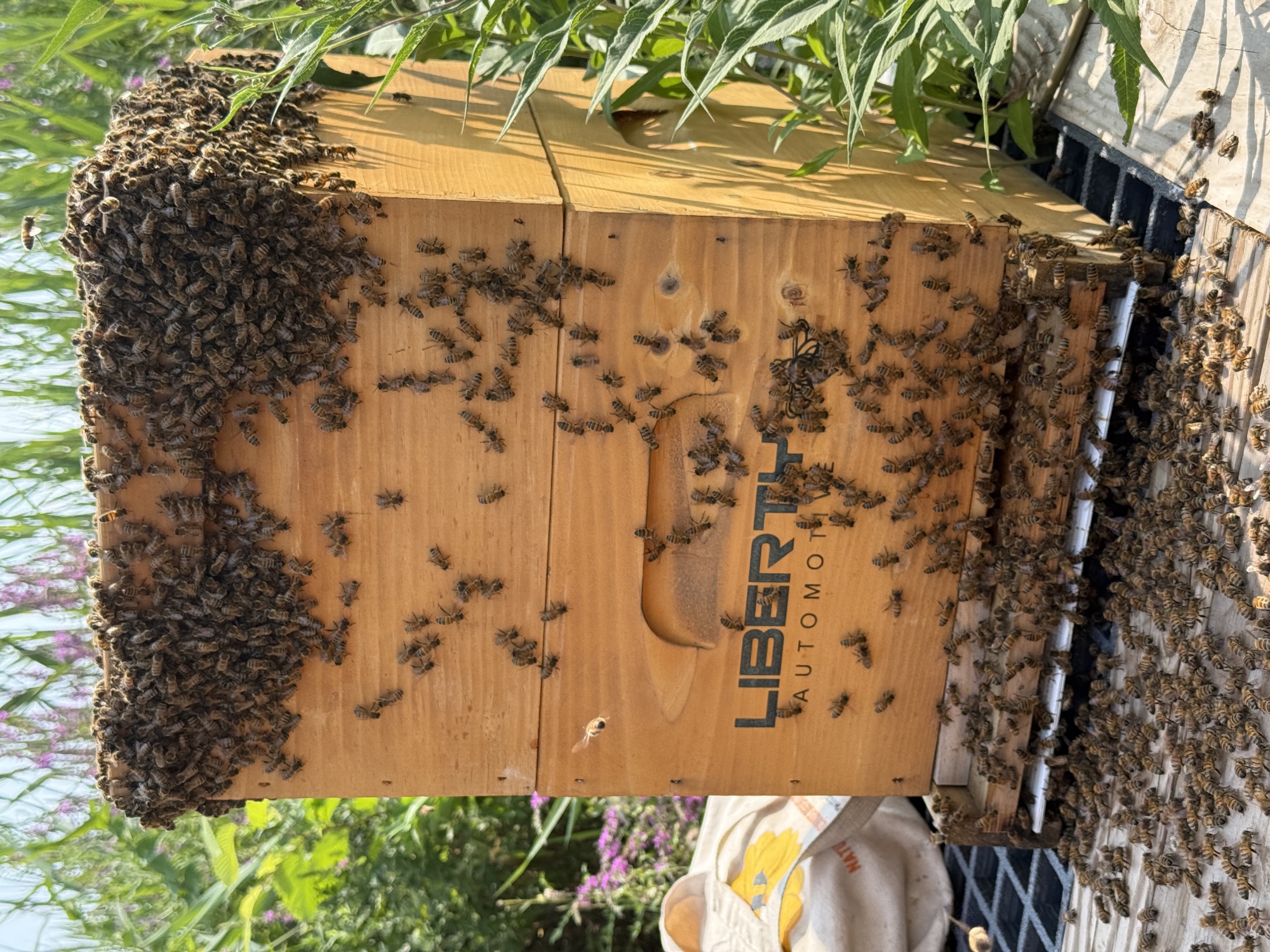
No bee gets a different quote. That is the whole reason there are hives on our campus.
Karl von Frisch decoded the dance in the 1940s and eventually won a Nobel Prize for it. He proved that honeybees have something close to a shared language, and that the language is used for exactly one thing: telling the family the truth about resources.
Sixty years into our own family business, we can confirm the model works. Tell everyone the same price. Tell them what the trip costs. Let them decide. The colony thrives, and so do the guests it serves.