
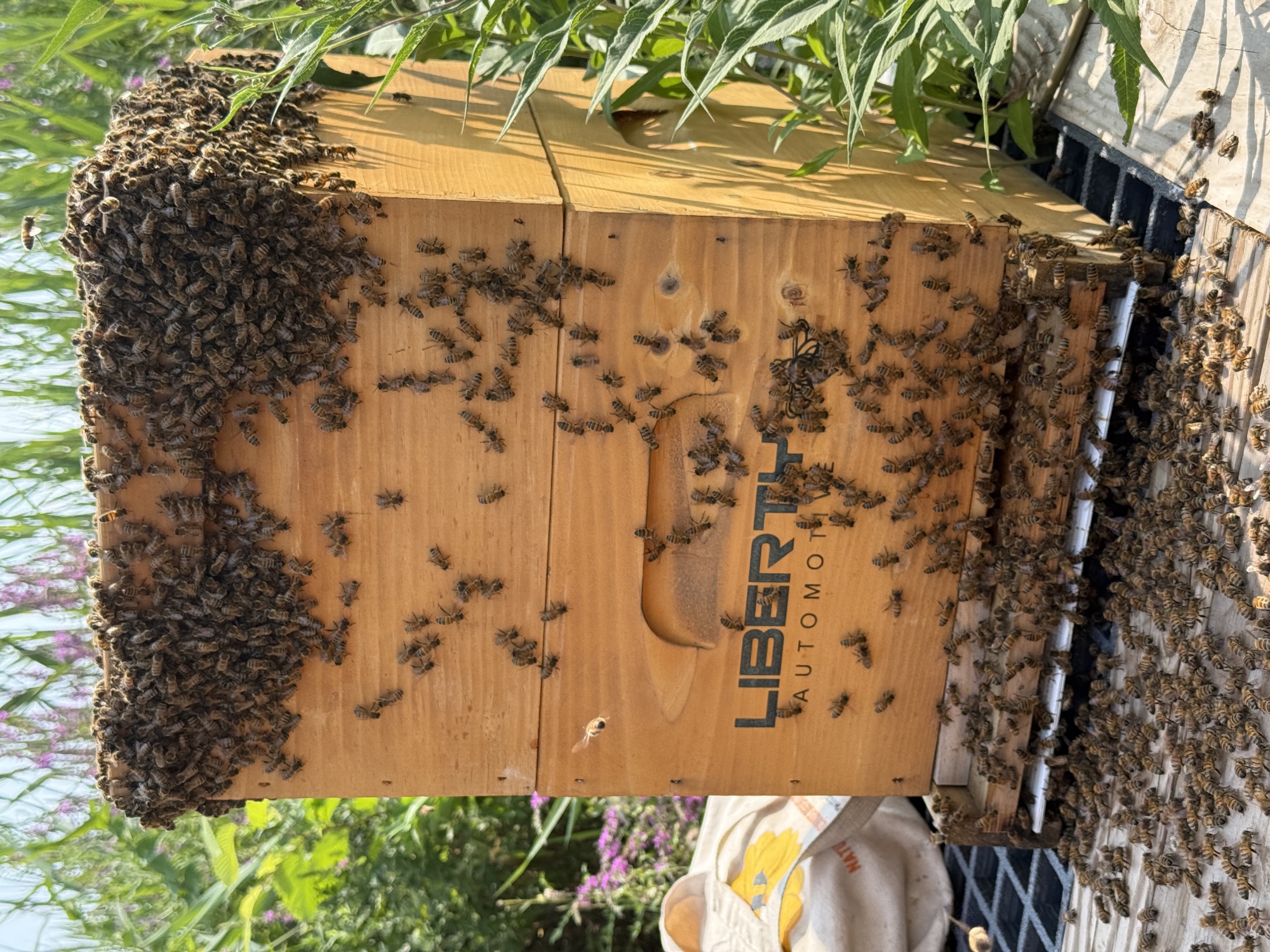
Everything in a jar of honey started out as nectar, and nectar is mostly water. Depending on the flower it can be two thirds water or more. Before any of it can become honey, almost all of that has to go.
A young house bee does the first patient work with her mouthparts. She holds a droplet of nectar out in the open, spread between her tongue and her jaws, lets the warm hive air pull moisture off it, then draws it back in and does it again. A researcher named Park described the behavior in detail back in 1925, and it later picked up the name tongue lashing.
From there the droplets go into open cells and the colony starts fanning. Wings move air across the comb until the water drops to somewhere around eighteen percent, and only then will the bees cap the cell with wax. Enzymes the bees add along the way split the nectar sugar into the glucose and fructose that make honey what it is. Cap it too early and the honey can ferment, so the bees simply do not.
No bee caps a cell before the work is finished, and that is a fair standard for a dealership too.
Here is the part that surprised us. Researchers in South Africa caught foragers coming home from macadamia bloom and found their crop contents already about twice as sweet as the nectar still sitting in the flowers, with up to three quarters of the water gone. Doing that head start on the wing saved the colony roughly thirty five times more energy than the bee gained by flying home lighter.
So the drying happens on the flower, on the wing, on the tongue, and on the comb, and none of it gets rushed. Our six hives sit out back in Libertyville doing that quiet work while the lot goes on around them. We try to run the store the same way, with honest numbers, never over MSRP, and nothing handed to you before it is actually ready.