
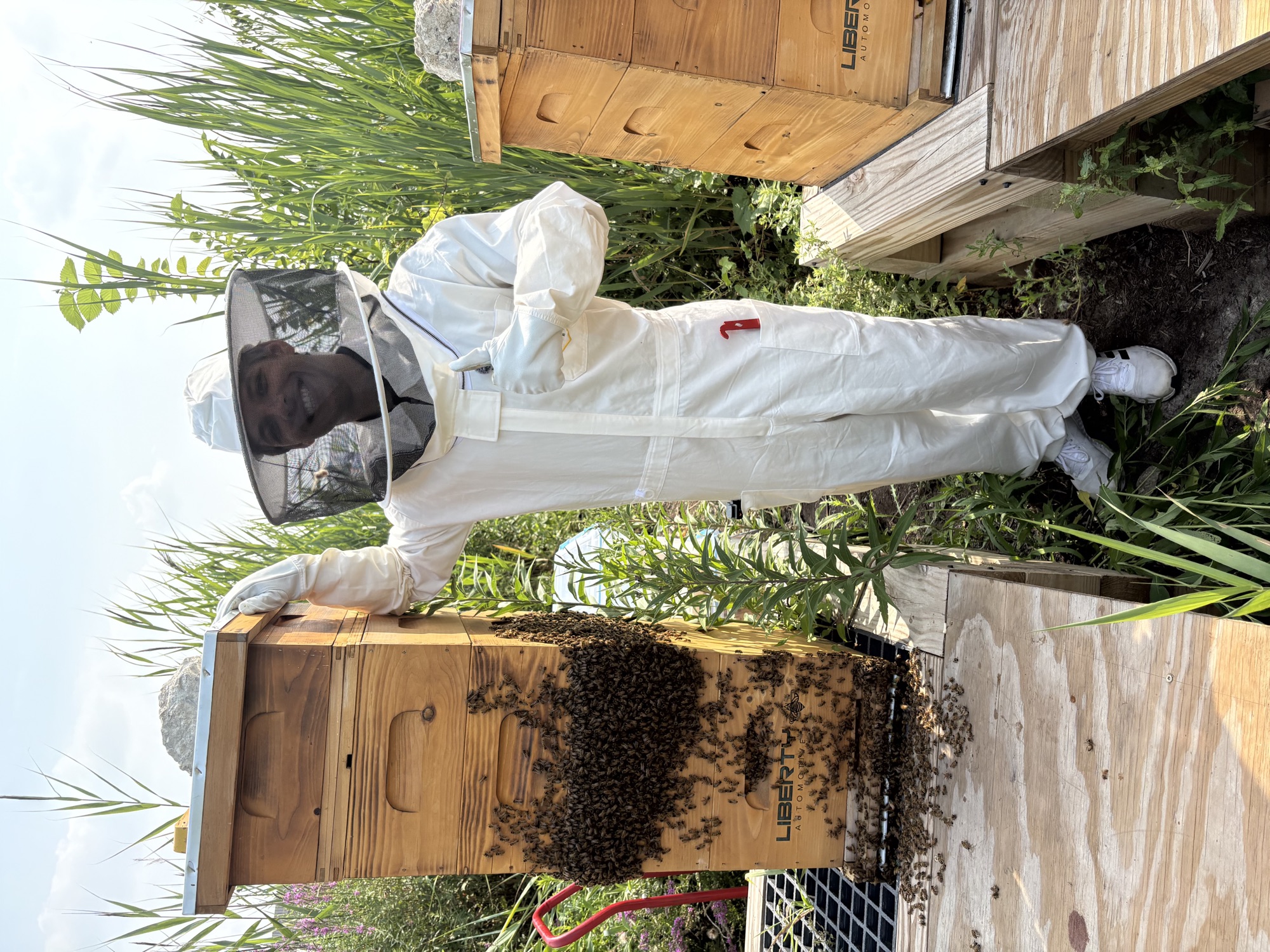
If something is circling your can of pop at a Libertyville ball game this week, it is almost certainly not a honey bee. It is a yellow jacket, which is a wasp, and the quickest way to tell them apart is fuzz. Illinois Extension describes yellow jackets as bright yellow and black and shiny, and honey bees as golden brown and fuzzy.
After color, look at the waist and at what the insect is doing. Bees are hairy and rounded. Wasps are hairless and pinched in the middle, which is where the phrase wasp waist comes from. A honey bee at a picnic is passing through on her way to a flower, often with pollen packed on her back legs. A yellow jacket is there for your lunch, and it will land on the pulled pork as readily as the melon.
There is a reason this happens in September and not in June. A yellow jacket nest that was quiet in early summer may hold thousands of workers by now, and far less is blooming to feed them, so they go looking for carbonated beverages, juice, candy, fruit and ice cream. That is not really aggression. It is a very large family running out of groceries all at once.
Look closely before you swing, because most of what gets blamed on bees was never a bee.
The difference is worth knowing before you swing at something. Yellow jackets can sting again and again, while a honey bee stings once and dies for it, so she is not going to spend her life on your sandwich. The nest bothering you is also nearly done: yellow jacket colonies are annual and never reused, the queens overwinter underground, and after five to seven days below 45 degrees Fahrenheit the workers die. Our honey bees do the opposite, going into the cold as a colony that can peak near 60,000 workers in summer.
If you want to help the bees this month, the useful moves are small. Cover the sweet drinks, keep a lid on the trash, and give anything striped a second look instead of a swat, because most of what gets blamed on bees was never a bee. We like that this fact comes down to looking closely before reacting, since that is most of our job on the lot too. Tell you plainly what you are looking at, put a straight number on it, never over MSRP, and let you decide.