
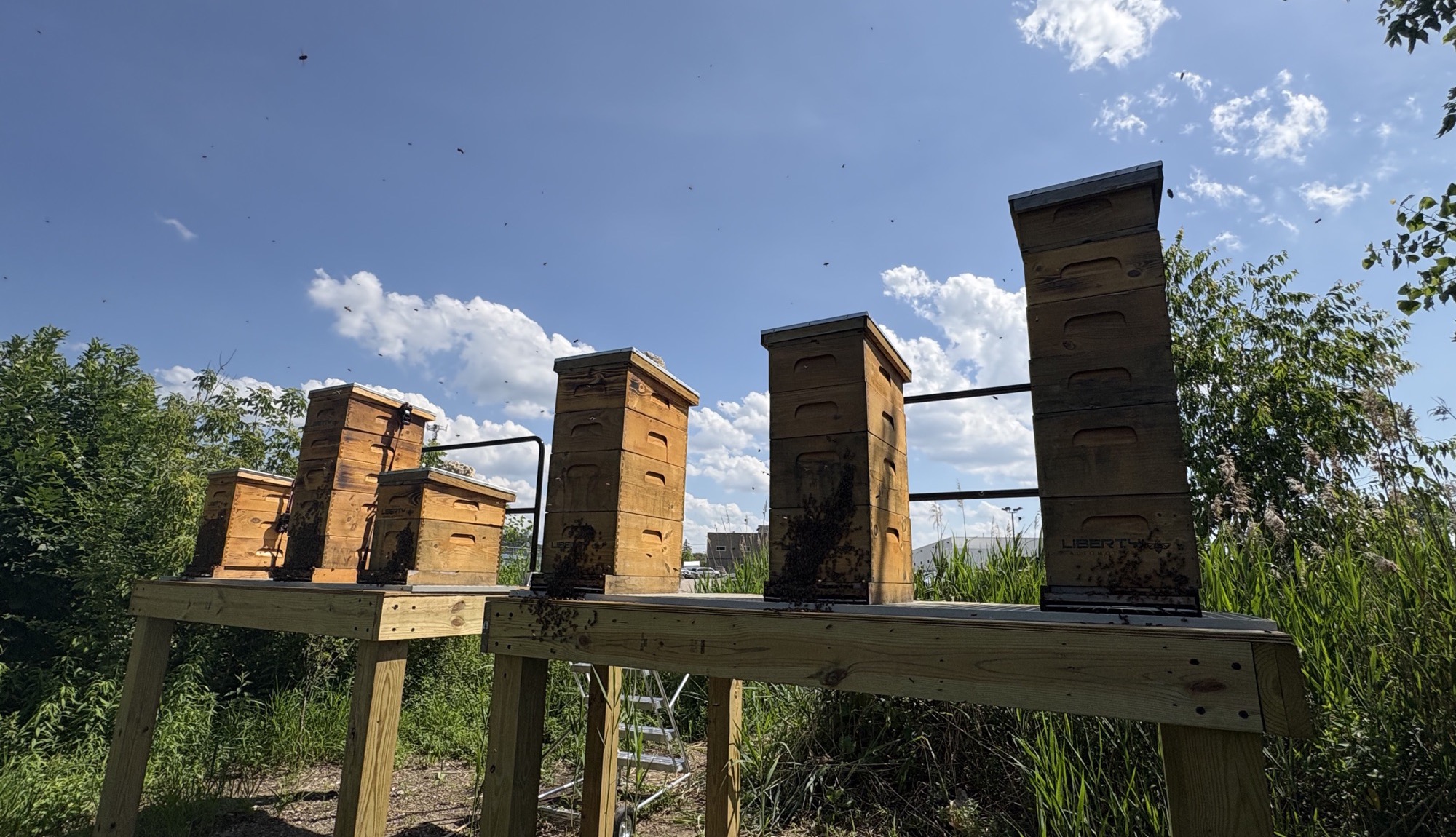
When a colony outgrows its home, about half the bees leave with the old queen and settle into a hanging beard on a nearby branch. They have no house yet, no comb, and no honey stores. What happens over the next day or two is one of the most closely studied decisions in the animal world, and there is nobody in charge of it.
A few hundred scouts fly out to find cavities. When one finds something promising, she returns and waggle-dances right on the surface of the swarm, and the strength of that dance tracks how good the site actually is. A scout back from a first-rate cavity may run about ninety waggle circuits. A scout back from something merely acceptable runs thirty, or a dozen.
Here is the part we keep coming back to. Each time a scout returns and dances again, she runs roughly fifteen fewer circuits than the time before, and that drop is about the same whether her site is excellent or ordinary. So the bee with the weak site runs out of dance and quits, while the bee with the strong one is still advertising several rounds later. Nobody argues her down. Her case simply expires.
No bee talks a bad site up, and no bee has to talk it down. A weak case runs out of dance on its own.
Meanwhile other scouts go look for themselves. Once about fifteen bees are at the same cavity at the same moment, which works out to roughly a hundred and fifty bees committed to it, the swarm starts warming up to fly. In Thomas Seeley's classic test, swarms offered one excellent box and four mediocre ones chose the excellent one in four trials out of five, and the winner was never the box they happened to find first.
What they are actually after is unglamorous. More than about twenty liters of space, an entrance smaller than a credit card, a few meters off the ground, facing south. Honest requirements, honestly checked, by bees who went and had a look. That is close to how we try to do business here in Libertyville: a price you can check yourself, never a dollar over MSRP, and no reason to take our word for any of it.