
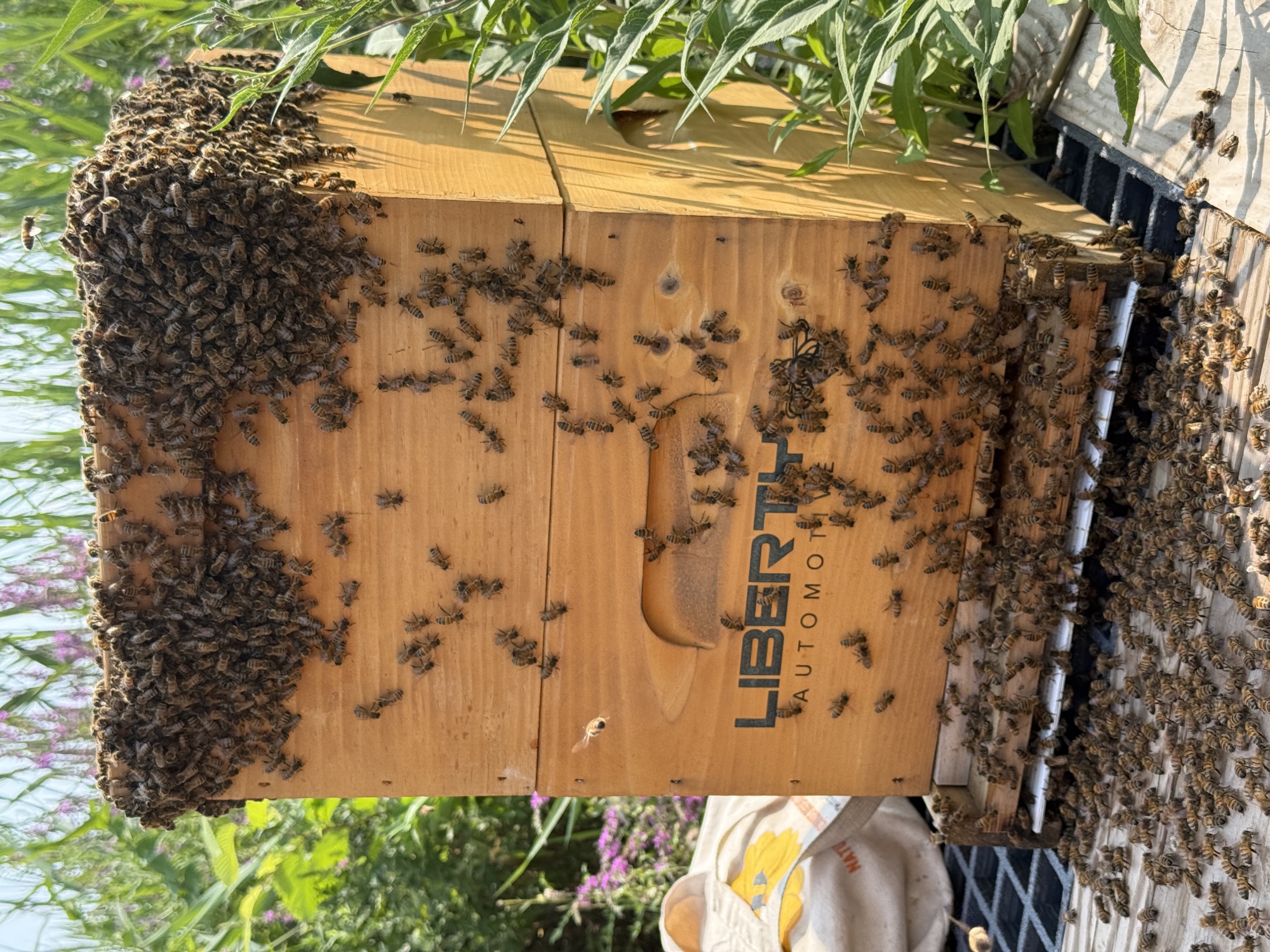
Archaeologists opening Egyptian tombs have found jars of honey three thousand years old, still golden, still perfectly edible. Honey is the only food we know of that simply does not spoil, and the reasons are a small masterpiece of chemistry.
Start with water, or the lack of it. Bees fan nectar with their wings until its moisture drops below about eighteen percent, and at that dryness the microbes that ruin food cannot survive. Honey is so thirsty it pulls water out of any bacterium that touches it.
Then there is acid. Honey sits around pH 3.9, roughly the territory of orange juice, which is a hostile neighborhood for almost everything that causes rot. And as a finishing touch, an enzyme the bees add called glucose oxidase slowly releases a trace of hydrogen peroxide, the same gentle antiseptic your grandmother kept in the medicine cabinet.
Archaeologists have eaten honey from Egyptian tombs. Your jar will outlast the car.
Dry, acidic, and mildly antiseptic. The bees engineered a food that guards itself, then sealed each cell of it under a wax cap like a tiny factory lid. When we harvest a frame, we are opening packaging that was designed about a hundred million years before packaging.
If your jar from our shelf ever crystallizes, that is not spoilage, just the sugars settling into order. Set it in warm water and it comes right back. There is no expiration date on the label because, truthfully, there is no expiration.