
Goldenrod does not cause your fall allergies. Its pollen grains are large, sticky and dense, too heavy for wind to pick up, so the only way they travel anywhere is on the body of an insect. Penn State Extension puts it plainly: goldenrod is insect pollinated, while ragweed is wind pollinated and one ragweed plant may produce a billion grains of pollen.
The mix-up is easy to forgive. Goldenrod and ragweed bloom at the same time, and goldenrod is the one you can actually see. It throws up bright yellow plumes along every roadside and fence line in Lake County in September, while ragweed stands in the same ditch with small greenish flowers nobody stops to photograph. You sneeze, you look around, and you blame the plant that stands out.
Tell them apart by the flower first. Goldenrod (Solidago) carries bright yellow flowers at the tips of its stems, above simple lance-shaped leaves three to six inches long. Ragweed (Ambrosia) has inconspicuous greenish flower spikes and deeply lobed leaves with about five primary divisions, and Clemson Extension notes that its crushed stems give off a green, minty smell.
Look close enough and the truth is easy to find, whether it is a roadside weed or a window sticker.
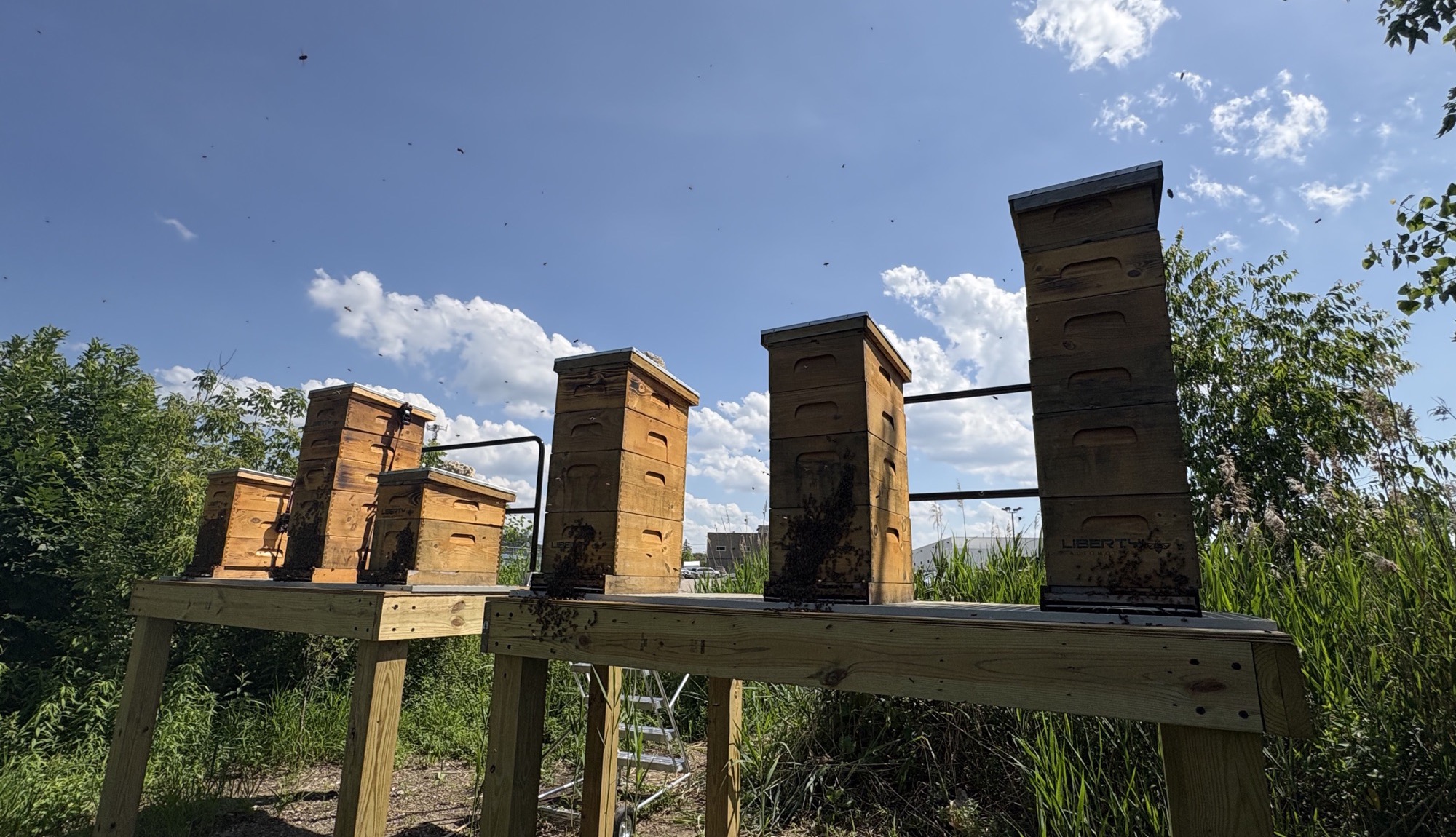
For our hives, goldenrod is the last real meal of the year. Penn State Extension calls it a prolific nectar and pollen producer, and that pollen is high quality, rich in protein, fats and minerals, which is exactly what a colony of Apis mellifera needs while it raises the long-lived bees that carry it through winter. Illinois Extension, citing a Field Museum guide, counts eighteen goldenrod species in the Chicago region, and our bees work every one they can reach.
We think about that pattern more than we probably should. The showy thing takes the blame, the quiet thing does the damage, and sorting out which is which takes somebody willing to look closely. It is the same reason we put our price on the window where you can read it and never sell above MSRP. Nobody should have to guess which plant is the problem.